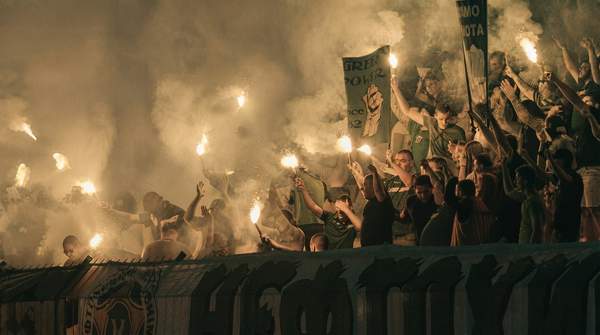
Historical Evolution and Global Diffusion
The ultras phenomenon originated in Italy before spreading across Southern Europe and then into Northern Europe, becoming the dominant form of fandom across the continent, as observed in research from the University of Brighton. This cultural movement has since achieved a truly global reach, with analyses and accounts of ultras found in regions including North America, Australia, Indonesia, and South America. The diffusion of this culture reflects the widespread appeal and adaptation of the ultra phenomenon.
The global diffusion of ultras culture is facilitated by modern media. Social media and television enable fans worldwide to observe and incorporate the styles and repertoires of other ultra groups into their own. This dynamic interplay between global trends and local specificities offers valuable insights into how global and local cultures intersect within the context of football fandom. Liam Newman of *These Football Times* notes that Europe and South America are the two regions where the ultra movement maintains its strongest presence, driven by an omnipresent passion and pride that sets football apart from other sports. This passion and pride are synonymous with nearly every ultra group, regardless of country, and are considered chief factors distinguishing football from other sports.
Socio-Political Expressions and Identity Formation
Ultras culture serves as a powerful forum for socio-political expression and identity formation. The wariness and distrust that ultras often direct towards authority figures, such as the DFB in Germany, reflect a broader contemporary political disillusionment. They perceive institutions as corrupt and illegitimate, viewing them as embodying the commercial and ideological interests that shape modern professional sports, as detailed in *Social Science History*. This critique is a significant driver of their actions and public displays, representing a broader contemporary political disillusionment that adopts an overarching critique of institutions.
Football clubs themselves are often deeply intertwined with the political, religious, or economic history of a region, symbolizing a way of life for millions. For ultras, the club becomes a focal point for demonstrating feelings and fostering a strong sense of community and identity. This collective identity is a central aspect of their fan culture, providing a sense of belonging. In some instances, the organized opposition of ultra groups, including ideological alliances and national organizations like Ultras Italia, suggests they can function as an emerging social movement in opposition to perceived repressive state actions, according to research in *Review of European Studies*. This research argues that elements such as the ideological alliance between the Ultras of Lazio and Roma, the violent reaction against police following the death of a Lazio fan in 2007, and the existence of Ultras Italia (a national organization uniting main Italian ultra groups) signify the beginning of a common meaningful opposition to the perceived repressive Italian State, indicating the ultras as an emerging social movement.
Local Adaptations of a Global Phenomenon
While ultras culture has spread globally, its manifestations are significantly shaped by local socio-political contexts. The global styles observed through social media and television are not merely replicated but are adapted and integrated with specific local influences. The beauty of studying football fans lies in the insights they offer into how global and local cultures intersect.
For example, in former East German contexts, such as with the Ultras Dynamo, a specific club identity rooted in the German Democratic Republic (GDR) era combines with broader ultras culture to form a unique localized identity. Research from the University of Brighton indicates that ultra symbolism in these regions can evoke discomfort due to historical ties to authoritarianism and right-wing extremism. This demonstrates how local socio-political histories are integrated into ultra expressions, creating a specific localized identity that combines with general ultra culture.
Similarly, Polish ultras integrate anti-Communist and nationalist slogans and images into their identity, reinforcing particular historical and political narratives. These groups often cultivate a rebellious and dangerous image, drawing on various historical elements to emphasize themselves as being at the vanguard of unpopular views. This illustrates how global ultra trends dynamically interact with and adapt to specific local histories and political sentiments, creating diverse expressions of a shared cultural phenomenon. The influence of Italian and more general ultras culture is evident, yet it consistently adapts to local influences, showcasing the dynamic interplay between global trends and local specificities.
The ultras phenomenon, therefore, is not a monolithic entity but a dynamic cultural expression deeply embedded in sociological factors. Its evolution and global spread are characterized by a constant negotiation between universal themes of collective identity and anti-establishment sentiment, and the unique socio-political landscapes of local communities. Understanding these intricate relationships is key to appreciating the enduring power and adaptability of ultra fan culture in football worldwide.