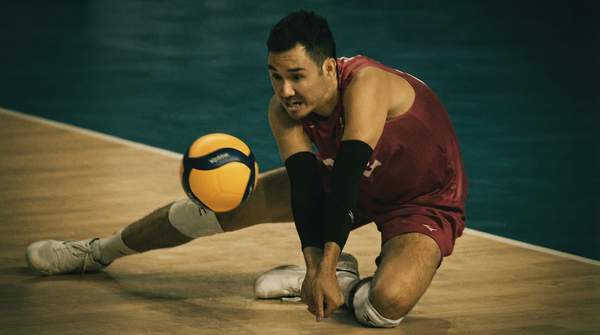
When the libero position was officially introduced in 1998, it was a targeted fix for a specific problem: volleyball's attack had outgrown its defense. The position, used only in indoor volleyball, was designed to improve the ball-control phase of the game, on the theory that better ball control creates more offensive options and longer, more exciting rallies. What followed was a slow-burning strategic revolution. Coaches took roughly fifteen years to fully explore the position's possibilities, and the libero evolved from a limited back-row defensive substitute into a central figure in serve-reception and, increasingly, secondary setting.
The Libero's Genesis: Balancing Offense and Defense (1998)
The libero's creation was not an isolated experiment but the continuation of a long regulatory philosophy. An analysis published in The Sport Journal describes how rule changes in volleyball had historically pursued a single logic: redressing the imbalance between attack and defense, with recent changes specifically endeavoring to enhance the defensive side of the game. The libero, introduced by the FIVB in 1998, fit that pattern. Coaching educators at Gold Medal Squared explain that the position was created with a specific goal—to improve ball control—because better ball control leads to more offensive options, which in turn produces longer rallies that players and fans enjoy.
Yet the same analysis argues the position produced a paradox. Its authors contend that the emergence of the libero contradicts the historical logic of rule development, claiming the game has reached a kind of deadlock that they propose to resolve through an altered court design and amended regulations. That debate matters less for its outcome than for what it reveals: the libero's influence on the game proved far larger and stranger than a simple defensive patch.
The Early Libero: A Specialized Defensive Role
In its first years, the libero was essentially a dedicated back-row defender. The position plays only in the back row and focuses almost entirely on defense and ball control, which is why liberos are often described as defensive or ball-control specialists handling a large share of a team's serve-receive, passing, and digging responsibilities. Early on, coaches used it narrowly—as a way to keep a superior passer on the floor without spending a standard substitution.
That narrowness was partly a matter of time. Volleyball coach John Forman, writing about the evolution of the position, observed that during a 2013 tour of US collegiate volleyball programs he saw a clear shift in how liberos were being used—and noted it was unsurprising that this took so long, since the position had only been introduced at that level about fifteen years prior. It was going to take time, he wrote, for coaches to find the best ways to make use of it. The early libero, in other words, was limited less by the rulebook than by coaching imagination still catching up to it.