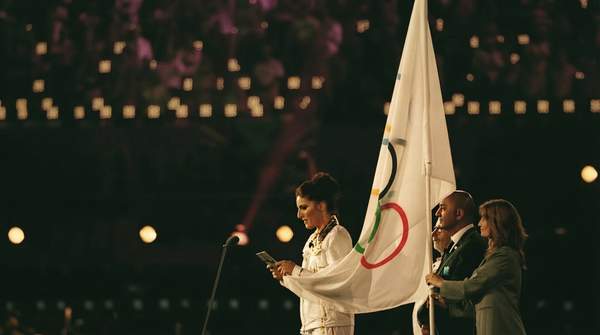
The Olympic Oath is one of the few ceremonial texts in sport that has been deliberately rewritten, again and again, to answer the ethical problems of its moment. First sworn in 1920 with the words "for the honor of our country," it has since been revised to strip out nationalism, amended to name doping explicitly, and restructured so that a man and a woman deliver it together. Each change in wording marks a shift in what the Olympic movement believed it needed to promise—and to guard against.
The Genesis of the Olympic Oath: 1920
The oath of the modern Games was written by Pierre de Coubertin, founder of the modern Olympic movement, and first spoken at the 1920 Antwerp Games by the Belgian fencer Victor Boin. As instituted in 1920, the text read: "We swear. We will take part in the Olympic Games in a spirit of chivalry, for the honor of our country and for the glory of sport." The framing is telling. The oath's central pledge was to chivalrous conduct, but its stated beneficiaries were twofold: the athlete's nation and sport itself. That pairing—country and glory—would define the text for the next four decades, and it is precisely the pairing that later reformers would target.
Combating Nationalism: The 1961 Revision
The first major rewrite came in 1961, and it was surgical. According to Topend Sports' account of the oath's history, two substitutions were made: "swear" was replaced by "promise," and "the honor of our countries" by "the honor of our teams," in an explicit effort to eliminate nationalism at the Games. The revised text read: "In the name of all competitors, I promise that we shall take part in these Olympic Games, respecting and abiding by the rules that govern them, in the true spirit of sportsmanship, for the glory of sport and the honor of our teams."
The shift from "countries" to "teams" is small in letter but large in philosophy. It relocates the athlete's loyalty from the nation-state to the squad, and the softened verb—promise rather than swear—tones down the solemnity of a pledge once framed in quasi-military terms. The ceremony itself would later follow the same logic: as Wikipedia's account of the oath records, in an attempt to eliminate nationalism from the ritual, all oath-takers have sworn on the Olympic flag rather than their national flag since the 1984 Games.
Expanding Responsibility: Officials and Coaches Join the Oath
The oath's evolution was not only textual; it also widened in who was bound by it. An oath for officials was first discussed in the 1950s, but it was not until 1970 that the International Olympic Committee voted to include one alongside the athletes' oath. The first officials' oath was taken by Fumio Asaki at the 1972 Winter Games in Sapporo, pledging to officiate "with complete impartiality, respecting and abiding by the rules which govern them in the true spirit of sportsmanship."
The IOC's own account of the ceremony's protocol dates the judge's oath to 1968, with a coach joining the athlete and judge at the ceremony since 2012. The recognition behind the coaches' oath, as the historical accounts note, was that coaches exert real influence on younger athletes—and that fair competition depends on more than the behavior of competitors alone.