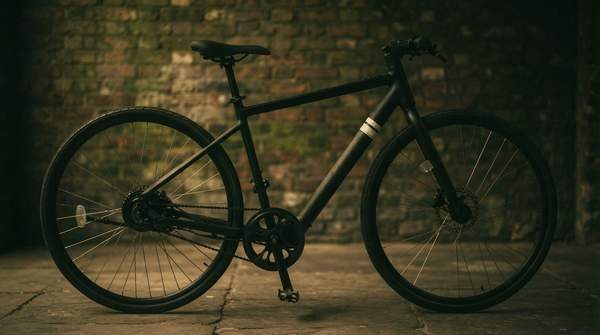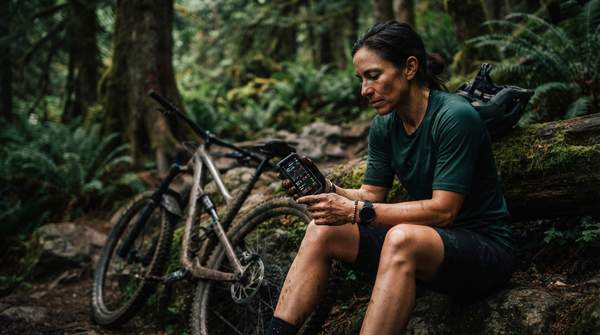
Artificial intelligence can spot patterns in your training data, but a 2026 scientific experiment on a single mountain biker suggests that recognizing patterns is not the same as understanding which workouts will actually make you faster. The study, described in the arXiv paper "The Athlete as a Scientist of One," found that an AI system called EpiCoach struggled to predict performance gains even as the athlete demonstrably improved on the same climb at nearly the same heart rate. The gap between what the AI could compute and what the rider's body was actually doing illustrates why sports medicine professionals remain skeptical that today's tools can replace human coaching judgment.
The Promise and Reality of AI in Training
The appeal of AI coaching is straightforward. As the American Orthopaedic Society for Sports Medicine has noted, AI can in principle create individualized training regimens based on an athlete's unique physiology, performance metrics, and recovery status, adjusting training loads, intensities, and recovery periods in real time to optimize performance while minimizing overtraining risk. That is a genuinely attractive proposition for athletes who cannot afford a full-time coach.
The reality, according to the same sports medicine community, is more modest. Even models trained on extensive data sets can produce outputs that are "sometimes be inaccurate or incomplete, raising concerns about the reliability of the information," and clinicians are advised to treat AI-generated insights as something that should complement rather than replace human judgment. The EpiCoach experiment offers a rare, detailed look at where that complementarity breaks down in practice—because its author logged the failures, not just the successes.
EpiCoach: A Mountain Biker's Data Reveals AI's Struggle
EpiCoach is an "agentic system" that treats one athlete—a cross-country mountain biker—as the subject of accountable N-of-1 science. Its design is unusually rigorous for a consumer context. Claims about the athlete live in an evidence-gated hypothesis registry: each claim must issue a probabilistic prediction about a future session before it occurs, and the system's belief only moves through computed evidence from a logged statistical fit. The predictions come from a mechanistic digital twin inferred from heart rate, GPS, and barometric altitude, combining a lagged heart-rate response model, a fitness-fatigue model with learned time constants, and a latent technical-descending skill state measured on discovered trail segments.
Yet the core finding, as reported by TodoMountainBike's coverage of the research, was a discrepancy: the rider rode the same climb at nearly the same heart rate and gradually got faster, while the AI designed to predict his performance struggled to keep up. The research suggests AI can learn certain patterns in an athlete's physiological response—but predicting those patterns is not the same as understanding which workouts will make that athlete faster. Notably, the study did not demonstrate that the AI's recommendations were superior to conventional coaching.
Understanding AI's Training Limitations: An Explanatory Model
To make sense of why a well-designed system still struggled, it helps to break the data-to-recommendation pipeline into stages and locate the specific failure point at each one. The framework below draws on the EpiCoach findings and on expert commentary from sports medicine and rehabilitation professionals.
| Pipeline stage | The AI challenge | Evidence from EpiCoach and experts | Impact on your training |
|---|---|---|---|
| 1. Data input | Some baseline device metrics are proprietary and cannot be used as model inputs; key physiological components may be poorly identified even after long observation. | The EpiCoach paper reports that several device metrics used as baselines are proprietary and excluded from the retrospective twin, and that the fitness–fatigue component "is poorly identified after eighteen months of observational data." | The AI may be building its picture of you from an incomplete or underdetermined slice of your physiology. |
| 2. Interpreting context | Before interpreting physiology, the system must establish that its measurements describe the same terrain and comparable efforts. | EpiCoach had to verify comparability across sessions; the AI struggled to predict performance even as the athlete got faster on the same climb at nearly the same heart rate. | Improvements you feel may not register as improvements the model can explain or anticipate. |
| 3. Balancing safety vs. effectiveness | An algorithm maximizing information about training responses might favor demanding workouts inappropriate for the athlete's current condition. | EpiCoach enforces hard caps on heart rate and load, plus readiness and illness gates; during its initial prospective phase, its safety mechanism rejected two proposed training decisions that violated established constraints. | Recommendations may be either too aggressive for your current state or, conversely, so constrained that they under-train you. |
| 4. Delivering reliable outputs | Generative AI outputs can be inaccurate or incomplete, and models may prioritize safety over training effectiveness. | A 2023 study in Biology of Sport found GPT-4 "often prioritizes excessive safety over effectiveness of training" and fell short on condition-specific prescriptions; sports medicine guidance stresses that AI insights should complement, not replace, clinical judgment. | Generic, overly cautious, or contextually inappropriate advice presented with confident framing. |
The reader can use this framework diagnostically: when an AI fitness tool disappoints, the problem usually sits at one of these four stages—what it can see, what it can compare, what it is willing to recommend, and how trustworthy its output is.
The Unbridgeable Gap: What AI Measures vs. Real Improvement
The deepest lesson of the EpiCoach case is that measurement and adaptation are not the same thing. The system had excellent inputs—heart rate, GPS, barometric altitude—and a mechanistic model designed to represent fitness and fatigue dynamics. It still could not reliably translate those signals into predictions that kept pace with the rider's real-world gains. Part of the reason is structural: the fitness-fatigue component remained poorly identified even after eighteen months of observational data, meaning the very thing the model needed to learn—the athlete's adaptive response—resisted identification.
Physical therapist Katy Vieira, quoted in a piece examining whether AI should be your personal trainer, frames the physiological stakes plainly: "Pushing the needle gently is the only way the body will respond and adapt. This is where AI may be lacking." Real improvement depends on calibrating stress to an individual's current capacity, something a model that cannot fully identify your adaptive state may systematically get wrong in either direction.
Why Human Coaches Remain Essential
The professionals interviewed for that same analysis converge on what humans provide that current AI cannot. Vieira emphasizes appropriately calibrating and individualizing training programs, warning that pushing too far too soon can be dangerous and undermine confidence. A trainer quoted in the piece, Kane, argues that AI will ultimately clarify what good trainers are for: "We don't need people counting reps and creating new supersets. We need 100% focus, critical thinking, real-time feedback, hands-on adjustments, and feeling cues."
These are not sentimental claims. They map directly onto the failure points above: real-time feedback corrects for context the model missed; hands-on adjustments compensate for data the sensors never captured; critical thinking catches recommendations that are technically permissible but wrong for the person in front of you. The EpiCoach safety gates worked precisely because they were predefined constraints—human judgment, encoded in advance.
Making Informed Decisions About AI in Your Training
Readers should approach AI-powered fitness tools with a critical perspective, understanding that while they offer benefits, they currently cannot fully replicate the nuanced judgment and adaptability of a human coach—especially for complex physiological responses or personalized safety considerations. This analysis reflects the limitations described in the 2026 EpiCoach experiment and expert commentary; it is not a review of any specific commercial product, and it is not medical or training advice.
A practical check is available to anyone using these tools: monitor whether your AI training program consistently delivers measurable performance improvements that align with your real-world experience, or whether it frequently provides generic, overly cautious, or contextually inappropriate recommendations. If your own times on a familiar climb keep dropping while your app's predictions lag behind—or its advice ignores obvious context like illness, terrain, or fatigue—that is the EpiCoach discrepancy appearing in your own data, and a signal to weigh human expertise more heavily.