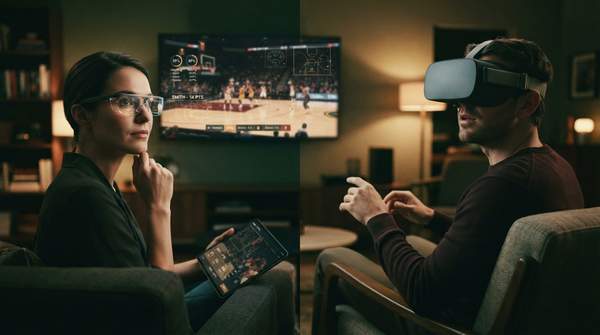
The central trade-off in sports broadcasting's streaming transition is stark: over-the-air broadcasts can dramatically expand audience reach while capturing almost no data, while direct-to-consumer platforms capture rich behavioral insight at the cost of narrower immediate reach and heavier infrastructure demands. PwC's analysis of digital sports consumption notes that some teams broadcasting games over the air expect to triple their audience reach in their home states—yet that expansion "won't significantly deepen teams' understanding of newly reached fans" because over-the-air viewers leave no data trail. The strategic question for any broadcaster is therefore not whether to stream, but which combination of engagement features, technical investment, and business model fits their goals.
The Evolving Landscape of Sports Fandom: From Passive to Hyper-Engaged
The passive broadcast spectator—someone who watches a game and simply returns next week—is giving way to a fan who expects to participate. Wowza's guidance on fan engagement in sports streaming frames this directly: "Sports fans are active participants in their fandom. Sports streaming needs to capitalize on that drive to engage by providing myriad opportunities to do so."
This shift has real consequences for loyalty. Lumenalta's analysis of digital transformation in sports media argues that fan loyalty now "hinges on more than wins and losses; it hinges on how personalized and interactive the viewing journey feels." A team can win and still lose a subscriber if the experience feels static compared to the interactive platforms fans use everywhere else.
The result is a fan who functions less like an audience member and more like a stakeholder in a digital ecosystem—chatting in real time, voting in polls, competing in quizzes, and expecting the platform to respond. Interactive features are no longer decorative add-ons; they are the mechanism through which streaming platforms build community, gather data, and justify their existence relative to a linear broadcast.
Strategic Goals for Streaming: Reach, Monetization, and Premium Experiences
Before choosing features or infrastructure, a broadcaster must decide which of three strategic goals dominates. PwC recommends an omnichannel approach that "concentrates on boosting viewership and gathering insightful behavioral data about their fanbase"—but these two objectives pull in different directions and rarely optimize together.
A mass-reach strategy leans on broad distribution and accessibility, potentially keeping over-the-air broadcast as a component. A deep-monetization strategy accepts a smaller, identified audience in exchange for data richness and direct revenue through subscriptions and sponsorship. A premium-experience strategy targets the most devoted fans with personalized, interactive viewing that commands higher retention and per-user value.
Lumenalta adds a structural pressure shaping all three: rights models are fragmenting, and successful digital strategies require agility to manage micro-packages and direct-to-fan content. The strategic goal a broadcaster chooses determines which rights packages, engagement tactics, and infrastructure investments make sense.