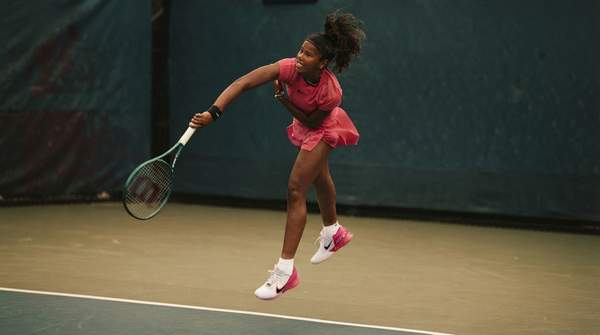
The hardest throws and fastest serves in sport are not produced by the arm. They are produced by the whole body, in sequence. Biomechanists call this the kinetic chain: energy generated in the large, powerful muscles of the legs and hips is passed upward through the trunk and finally out through the shoulder, arm and hand. When that sequence is well coordinated, velocity rises and joint stress falls; when it breaks, power leaks away and individual joints absorb loads they were never designed to handle alone.
Understanding the Kinetic Chain in Rotational Sports
A narrative review of the kinetic chain in sports performance and injury risk defines efficient energy transfer as the sequential movement of energy from the larger, more proximal parts of the body to the smaller terminal parts. The review links efficient transfer along the chain to both a lower risk of injury and higher performance, because a synchronized chain reduces joint loads, enhances velocity and increases force production throughout the motion. Notably, it reports that higher-level players use shoulder and wrist power better precisely because they engage the entire body chain rather than relying on the arm in isolation.
The underlying logic is simple but often ignored in practice. As performance writer Rahul Tiwari argues, two errors recur constantly in sport: treating symptoms without understanding their origin, and assessing individual body segments without accounting for the system they belong to. The kinetic chain framework corrects both by insisting that the body is an integrated system, not a collection of independent parts. In throwing motions specifically, the review notes that power generation starts in the lower limbs and core, where the body's largest and most powerful muscles are located.
The Baseball Pitch: A Kinetic Chain Deconstruction
Seen through this lens, a pitch is less a single action than a relay race run in under two seconds. The legs are the engine, the core is the transmission, and the arm is merely the final delivery mechanism. The Aspetar Sports Medicine Journal, writing about the kinetic chain in tennis but describing a mechanism common to all overhead motions, captures this division of labor vividly: the shoulder functions primarily as a funnel, "transferring the forces developed in the engine of the core to the delivery mechanism of the hand."
This reframing matters for how athletes interpret their own bodies. The high muscle activation seen in the shoulder during throwing is directed mainly toward co-contraction force couples that stabilize the joint, not toward generating the throw itself. The shoulder's job is to stay stable while passing along the momentum created below it. A pitcher who feels the arm "doing all the work" is therefore describing a chain that has already failed upstream.