Across eight outcomes and 47 comparisons, no physical recovery modality was shown to outperform passive recovery in competitive or elite endurance athletes. That is the headline finding of a 2026 systematic review and network meta-analysis published in Frontiers, and it lands squarely against the grain of what the recovery literature usually reports. For athletes who swear by ice baths, stretching, or massage, the honest answer from the current evidence is more nuanced than marketing suggests: some methods may make you feel better, but none has been reliably proven to make you perform better than simply resting.
Introduction: The Quest for Faster Recovery
Recovery has become an industry. Cold plunges, compression gear, massage guns, and elaborate stretching routines all promise to compress the gap between hard sessions. The desire is understandable: for competitive endurance athletes, the faster the body rebounds, the harder it can train. But the scientific picture, drawn from recent reviews of the literature, is far less certain than the enthusiasm.
Writing for the Gatorade Sports Science Institute, sports scientist Shona L. Halson reviewed recovery techniques and found that while well-controlled laboratory studies have demonstrated positive effects of various forms of hydrotherapy on performance, findings in team sport scenarios were less clear, hampered by limited studies and large differences in methodology. An umbrella review of recovery strategies in endurance athletes reached similarly cautious conclusions. The most rigorous synthesis to date—the 2026 Frontiers review—found that certainty of evidence was very low for two thirds of comparisons and never exceeded moderate.
Performance vs. Perception: Understanding True Recovery
The central distinction any athlete needs is between two different outcomes: objective performance on a subsequent effort, and subjective feelings of soreness or well-being. These are not the same thing, and the evidence treats them very differently.
Consider what the reviews actually report. Cold water immersion is consistently associated with reduced perceived muscle soreness, and UCHealth notes it can help reduce the lactic acid that builds up after a workout—but the same source notes it "hasn't been clearly linked to improved performance." The Frontiers review goes further, arguing that athlete preference, perceived benefit, cost, and opportunity cost are legitimate grounds for a recovery decision—and, given what it calls "the sham result," they may be the honest ones. In other words: if a method makes you feel recovered, that perception has value, but it should not be confused with a measured performance gain.
Cold Water Immersion: A Mixed Bag of Benefits
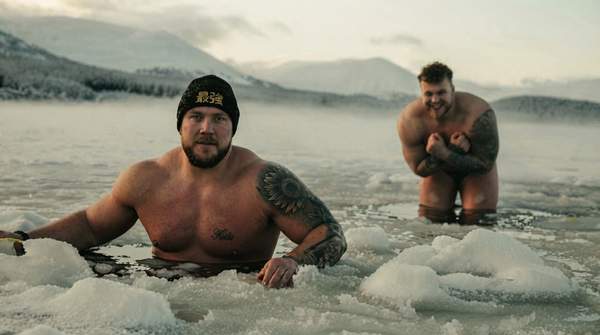
Cold water immersion is the most-studied of the three modalities, and the most methodologically scattered. The umbrella review of endurance athletes notes that despite numerous studies on CWI, the variety in how it is applied—immersion times, patterns, ambient temperatures, immersion areas, and other factors—makes it hard to give concrete recommendations for best practice. It also flags a recent review by Malta and colleagues (2021) that found CWI to be harmful for different performance variables, though those findings were based on non-endurance athletes.
Halson's review echoes the split: positive hydrotherapy effects in controlled laboratory studies, but less clear findings in team sport settings. One striking illustration from the umbrella review: a study's apparent benefit was explained by shivering, which was treated as light exercise, rather than by the cold itself. That is exactly the kind of confound that makes the performance evidence so hard to trust.
Stretching and Massage: Limited Evidence for Performance Gains
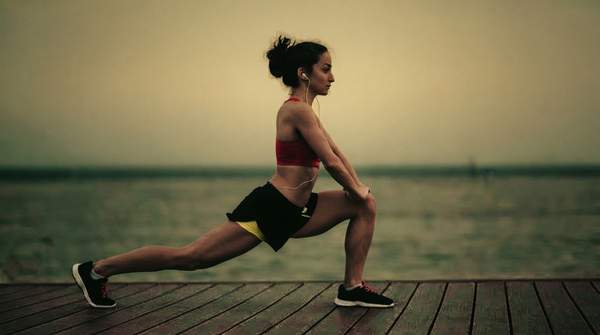
Stretching fares worse. Halson reports mixed findings: dynamic stretching was significantly superior to active or passive recovery for maintaining a second bout of cycling to exhaustion in one study, and stretching after a muscle-damaging protocol improved range of motion and reduced soreness compared to a control. But two separate reviews of recovery methods, she notes, concluded there was no benefit for stretching as a recovery modality. UCHealth's guidance is blunt: skip static stretching unless you enjoy it, because while static stretching and foam rolling may decrease muscle soreness, research hasn't revealed a clear performance benefit.
Massage shows a similar pattern. Halson cites multiple studies reporting no increase in blood flow or lactate removal during massage, and one study in which massage actually impaired blood flow and lactate removal. One trial found massage superior to passive recovery in maintaining cycle performance 24 hours apart, but active recovery and cold water immersion provided greater, non-significant benefits compared to massage; another found massage no more effective than passive recovery between two simulated 5 km time trials. The pattern is inconsistency, not efficacy.
Recovery Modalities: Performance vs. Perception
The table below maps each modality's popular claims against what the reviews actually found, separating objective performance effects from subjective soreness effects and grading the strength of the underlying evidence.
| Recovery Modality | Claimed Benefit | Scientific Finding (Performance) | Scientific Finding (Soreness/Perception) | Strength of Evidence |
|---|---|---|---|---|
| Cold Water Immersion (CWI) | Reduces muscle soreness and aids recovery | Positive effects in controlled lab studies, but less clear in team sport settings; not clearly linked to improved performance; one review found CWI harmful for performance variables (non-endurance athletes) | Consistently associated with reduced perceived muscle soreness (DOMS); may help reduce lactic acid buildup | Limited and inconsistent for performance; application protocols vary too widely for concrete recommendations |
| Stretching | Decreases muscle soreness and improves flexibility | No clear performance benefit; two reviews concluded no benefit as a recovery modality | May decrease soreness and improve range of motion after muscle damage, but effects are mixed and subjective | Mixed; single positive studies contradicted by review-level conclusions of no benefit |
| Massage | Aids muscle recovery and removes metabolic byproducts | No established benefit; studies report no increase—or actual impairment—of blood flow and lactate removal; results vs. passive recovery inconsistent | Not established as superior to passive recovery in the cited studies | Limited; findings inconsistent across trials with different protocols |
The verdict the evidence supports: none of the three modalities is scientifically supported for improving objective performance over passive rest, while cold water immersion has the most consistent—though still subjective—support for reducing perceived soreness.
Why is the Evidence Inconclusive?
The weakness of the evidence is not an accident of a few bad studies; it is structural. The Frontiers review found that of the three confidence intervals that excluded the null, none survived scrutiny: two arose from single-trial nodes, and all three came from networks in which incommensurable measures were pooled. Its authors are explicit about what the field needs: a smaller number of adequately powered trials with sham or attention-control comparators, pre-registered outcomes, and a commitment to reporting arm-level means and standard deviations so results can enter synthesis. They also note that the lactate and neuromuscular outcome labels currently cover measures that answer different questions.
The umbrella review adds its own caveats: results trace back not only to reviews but to individual studies, and the number of analyses on the time course of different recovery strategies was limited. Small samples, absent sham controls, and inconsistent protocols are the recurring themes. This is why the same modality can look effective in one trial and useless in the next.
Deciding Your Recovery Strategy
What should an athlete do with this? The Frontiers authors offer a surprisingly pragmatic framing: preference, perceived benefit, cost, and opportunity cost are legitimate grounds for a decision. UCHealth's quoted clinician makes the same point from the treatment room: "A lot of people love stretching, and there is a decreased perception of pain. At the end of the day, it's about doing whatever feels good and works for you."
The decision the evidence supports is this: athletes should prioritize recovery methods with clear scientific support for their specific goals, understanding that many popular techniques primarily offer subjective benefits rather than objective performance gains. If your goal is feeling fresher and less sore before the next session, cold water immersion has the most consistent support for that perception. If your goal is measurably better performance than passive rest, no modality here has earned that claim.
The measurable indicator is straightforward: track whether your chosen recovery method consistently improves objective performance metrics—power output, sprint times, time-trial results—or primarily reduces perceived muscle soreness, and adjust your routine based on those actual outcomes rather than on how recovered a protocol is supposed to make you feel. Two caveats apply: this synthesis covers physical recovery modalities for endurance athletes, not nutritional strategies, and it reflects existing reviews rather than new primary research. Athletes with specific recovery needs should consult a professional for personalized protocols.
Sources
- Frontiers | Physical recovery modalities in competitive and elite endurance athletes: a…
- Recovery Techniques For Athletes - Gatorade Sports Science Institute
- Effectiveness of Recovery Strategies After Training and Competition in Endurance Athletes: An Umbrella Review - PMC
- Rest and recovery are critical for athletes of all ages from students to pros to older adults — UCHealth Today