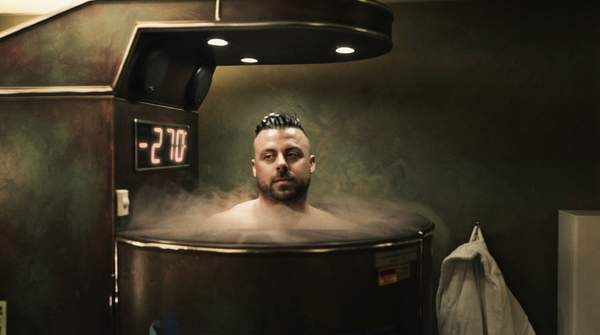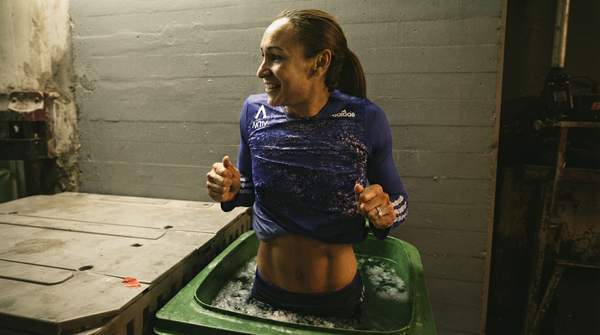
Cold water immersion (CWI) works as a recovery tool through two intertwined physiological routes: it slows the nervous system's transmission of pain, and it dampens the inflammatory and metabolic aftermath of hard exercise. Those same dampening effects, however, are precisely what may interfere with the signals that drive long-term muscle growth. A 2015 study of 24 physically active men, cited by the American College of Sports Medicine, found reduced strength and hypertrophy in the group that used CWI immediately after exercise. The practical question for an athlete is therefore not whether CWI works, but when to use it.
Understanding Cold Water Immersion: Beyond the Chill
CWI typically means immersing the body, or the exercised limbs, in cold water after training. Its popularity among athletes rests on a simple felt experience: getting out of the bath, soreness seems muted and the legs feel fresher. But the felt experience and the underlying biology are not the same thing, and researchers have been careful to distinguish them.
Writing for Science for Sport, Owen Walker describes the leading explanation as a combination of effects rather than a single mechanism. Immersion into cold water leads to decreased nerve conduction speeds and excitability, reducing nociceptor communication with the sympathetic nervous system and, ultimately, the perception of pain. Others have suggested the pain reduction relates to reduced inflammatory pathways: reduced nociceptor sensitisation, reduced exercise-induced oedema, and reduced white blood cell access to damaged tissue. This combined theory is, in Walker's words, "often referred to in the research as the primary physiological reason for improved recovery."
That framing matters for expectations. Reduced pain perception is a sensory outcome, not necessarily evidence that tissue repair has accelerated. An athlete who feels better is not automatically an athlete whose muscles have rebuilt faster.
Acute Recovery Mechanisms: How CWI Reduces Soreness and Fatigue
The clearest mechanism is neural. By lowering local tissue temperature, cold water slows nerve conduction, which quiets the nociceptors that would otherwise signal damage to the central nervous system. Fewer and weaker pain signals mean less perceived soreness, even while the underlying micro-damage from exercise is still present.
The second mechanism is circulatory and metabolic. A 2025 network meta-analysis published in Frontiers, authored by Hai Wang, Lu Wang and Yingxu Pan, explains that cold water immersion "lowers local muscle temperature, slowing nerve conduction and muscle metabolic rates," allowing effective recovery in a short time while alleviating soreness and fatigue. The same review notes that CWI helps reduce muscle fatigue accumulation, promotes blood return, and aids in clearing metabolic waste such as lactic acid, accelerating energy supply recovery and micro-damage repair.
There is quantitative support for the muscle-damage side of this picture. In the Frontiers meta-analysis, two dose categories significantly reduced creatine kinase (CK), a standard blood marker of exercise-induced muscle damage, compared with control: moderate-duration immersion at colder temperatures (10–15 minutes at 5–10°C, SMD −0.90) and moderate-duration immersion at milder temperatures (10–15 minutes at 11–15°C, SMD −0.85). In other words, the recovery effect is not only subjective; measurable damage markers move too.
CWI: Acute Recovery vs. Long-Term Adaptation Trade-Off
The framework below separates each mechanism by its primary outcome: does it mainly help you feel and function better today, or does it mainly shape what your muscle becomes over months of training?
| Physiological mechanism | Effect on acute recovery | Potential impact on long-term adaptation |
|---|---|---|
| Reduced nerve conduction velocity and excitability | Quieter nociceptor signaling means less perceived pain and soreness after training | Not directly implicated in adaptation; a sensory effect rather than a repair effect |
| Reduced inflammatory pathways (nociceptor sensitisation, oedema, white blood cell access) | Less swelling and pain from exercise-induced muscle damage | Dampened inflammation may also dampen the signaling that drives repair and growth |
| Promoted blood return and metabolic waste clearance (e.g., lactic acid) | Faster recovery of energy supply and reduced fatigue accumulation | Not directly implicated in hypertrophy outcomes in the cited evidence |
| Lowered muscle temperature and metabolic rate | Short-time recovery of function, soreness and fatigue relief | Immediate post-exercise use associated with reduced strength and hypertrophy gains |
| Reduced creatine kinase (CK) levels (10–15 min at 5–15°C) | Significantly lower marker of muscle damage versus control | Lower damage signaling may coincide with blunted adaptation when applied immediately after resistance training |
Read down the first column and the pattern emerges: the mechanisms that make CWI feel effective in the hours after training are largely the same dampening processes that, applied at the wrong moment, may mute the stimulus the body uses to grow stronger.
The Trade-Off: CWI's Impact on Long-Term Muscle Adaptation
The Frontiers review frames the recovery benefits plainly: CWI allows "effective recovery in a short time while alleviating soreness and fatigue caused by muscle damage," which is crucial for athletes who need to regain jump capacity quickly. That framing contains its own caveat. Recovery in a short time is a competition-phase virtue; it is not the same as maximizing what a training block produces.
The caution comes from the strength-training side of the literature. The American College of Sports Medicine's article, written by Angela Goin, reports that a 2015 study of 24 physically active men showed reduced strength and hypertrophy in the group that used CWI as an immediate post-exercise recovery tool. The physiological logic is consistent with the acute mechanisms above: inflammation and the cellular response to exercise-induced damage are not merely side effects to be minimized, they are part of the message that tells muscle to adapt. Suppress that message immediately after resistance training, and the training stimulus may arrive at the muscle in a muted form.
Two qualifications keep this honest. The hypertrophy finding comes from a single small study reported secondhand, not from a meta-analysis of long-term training outcomes. And the effect is tied to timing: it is immediate post-exercise CWI, in the context of training aimed at muscle growth, that is implicated.
Strategic Application: When and How to Use CWI
The dose evidence from the Frontiers meta-analysis gives practical anchors: immersions of 10–15 minutes at water temperatures between roughly 5°C and 15°C significantly reduced CK relative to control. That range covers both the colder (5–10°C) and milder (11–15°C) protocols that showed effects, so athletes need not chase near-freezing water to get the measurable recovery benefit.
Timing is where strategy enters. During competition phases, when the priority is regaining function quickly between events, immediate post-exercise CWI aligns with the goal. During off-season training aimed at greater muscle strength and hypertrophy, Goin reports the suggestion that athletes delay cold water exposure for four to six hours after exercise, which should minimize the potential negative consequences while still offering decreased pain, soreness and recovery time. She also notes that morning CWI, prior to exercise, may suit strength-focused training days better than evening use, since immersion releases dopamine, norepinephrine and epinephrine, and late-day exposure could affect sleep cycles.
Safety belongs in any application guide. Goin lists contraindications that athletes and medical professionals should consider before using CWI: prior cold injury, claustrophobia, Raynaud's disease, hypothyroidism, cryoglobulinemia, cardiovascular disease (stage III or IV heart failure, coronary artery disease, unstable angina), uncontrolled hypertension, and sympathetic or sensory nervous system disorders. Injury risks include frostbite and cold water exposure injury, asphyxiation, and loss of consciousness. This article does not provide medical advice, and its scope is recovery for healthy athletes from exercise-induced muscle damage, not therapeutic treatment of injuries.
Making an Informed Decision: When to Integrate CWI
Athletes should strategically integrate CWI into their recovery protocols, prioritizing immediate pain and soreness reduction during competition phases, and delaying or avoiding it during phases focused on maximizing muscle hypertrophy and strength gains. The decision boundary is the training goal itself: a same-day second performance argues for prompt immersion; a block built to produce muscle argues for waiting four to six hours, or skipping the bath entirely.
The measurable indicator is simple to track: monitor training phase goals (competition versus hypertrophy) and adjust CWI timing accordingly, session by session. An athlete in a hypertrophy block who logs immersion times four to six hours post-exercise, rather than immediately, has implemented the evidence-backed compromise; an athlete peaking for competition who immerses promptly within the 10–15 minute, 5–15°C window has done the same for the opposite goal.